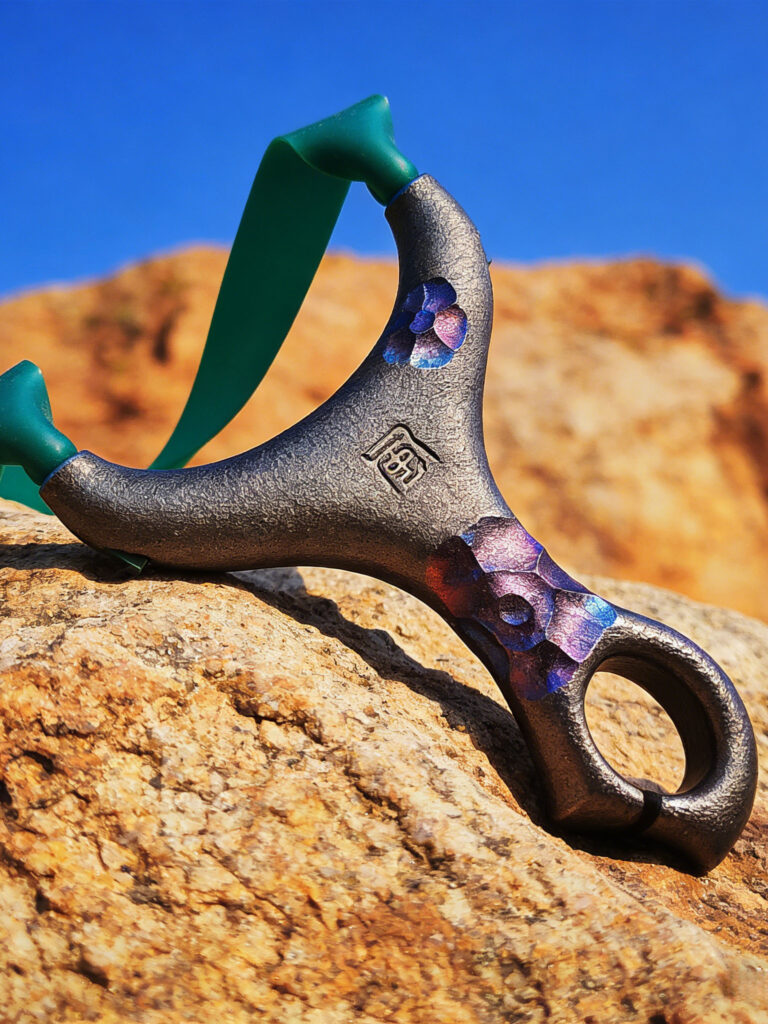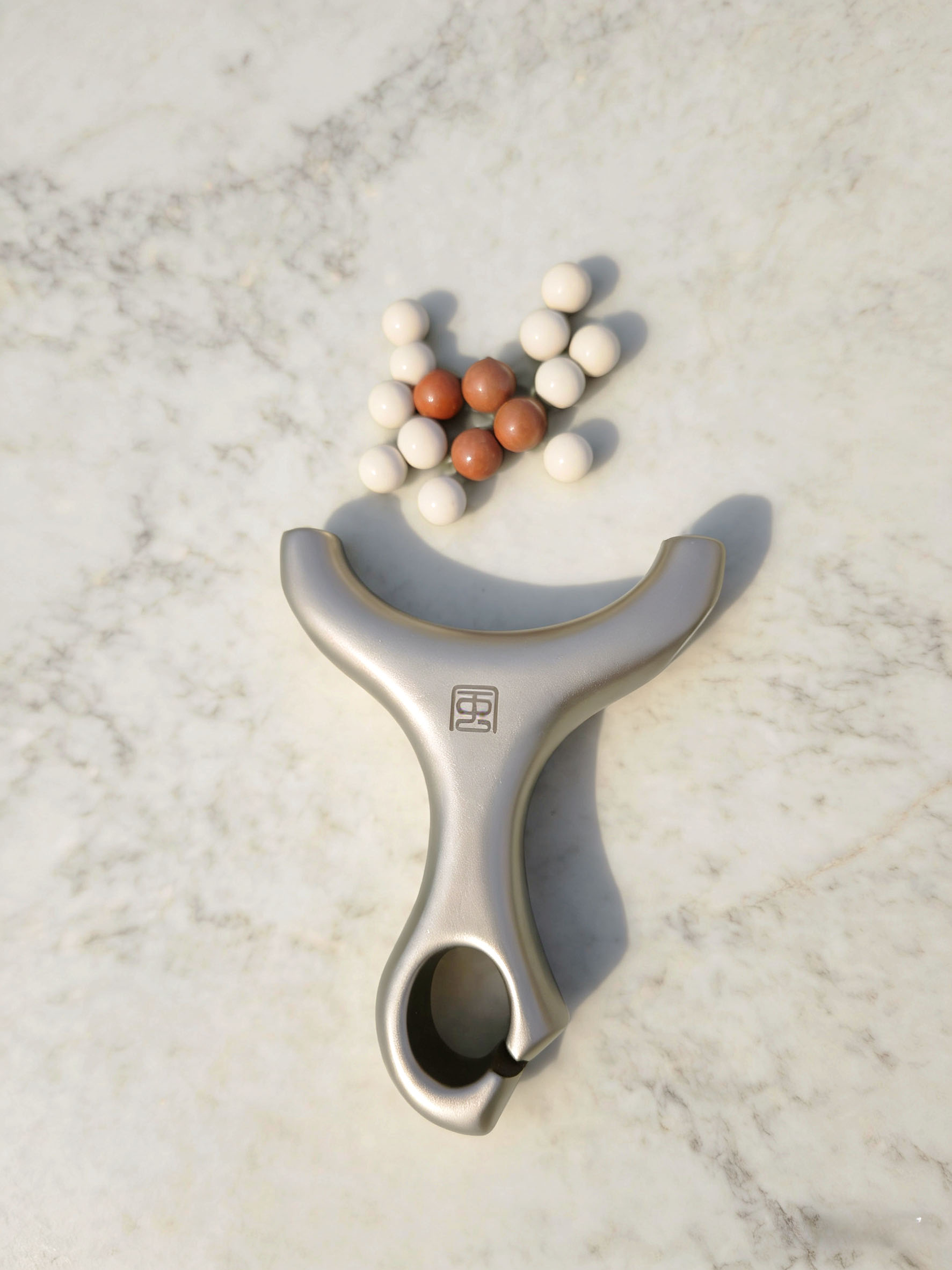
Why Slingshot Weight Changes the Way You Shoot
When people compare slingshots, weight is often treated as a simple specification.
Heavier or lighter.
Stronger or faster.
But weight does something much deeper than most shooters expect — it changes how your body moves.
And over time, it changes how you shoot.
The First Impression Is Often Misleading
A lighter slingshot usually feels impressive at first.
It moves quickly. It feels agile. Your hand reacts faster during aiming. Many shooters immediately associate lightness with performance.
A heavier slingshot creates a very different first impression. It feels slower, more deliberate, sometimes even unfamiliar.
Because of this, many people judge weight within the first few minutes.
But shooting is not a five-minute activity.
The real differences only appear after hundreds of shots.
Weight Influences Stability
During aiming, your hand is never perfectly still.
Small muscle movements constantly try to correct alignment. The slingshot becomes part of that balancing system.
A heavier frame naturally resists tiny movements. The added mass dampens micro-shakes, allowing some shooters to hold a steadier sight picture.
A lighter frame responds instantly to every adjustment. This allows faster correction but also means instability is more visible.
Neither is objectively better.
They simply encourage different shooting rhythms.
Fatigue Changes Everything
What feels comfortable at the beginning of a session may feel completely different later.
After extended shooting:
heavier slingshots provide stability but demand more endurance
lighter slingshots reduce fatigue but require finer control
This is why long-term comfort matters more than short-term preference.
Many experienced shooters eventually choose weight based not on performance, but on how long they enjoy practicing without strain.
Recovery Between Shots
One of the least discussed effects of weight is recovery speed.
After releasing a shot, your hand naturally resets.
A lighter slingshot allows quicker repositioning and faster follow-up shots. The movement feels fluid and responsive.
A heavier slingshot slows the motion slightly, encouraging a more deliberate pace.
Some shooters prefer speed and rhythm. Others prefer calm and consistency.
Weight quietly guides that decision.
Material Changes the Feeling, Not the Geometry
When the same design is made from different materials, the shooting experience remains familiar, but the character changes.
A dense material creates grounded feedback in the hand. The motion feels mechanical and stable.
A lighter material feels more alive — quicker to move and easier to carry through long sessions.
The geometry teaches your muscles how to aim.
The weight teaches your body how to move.
Choosing Weight Is Choosing a Shooting Style
There is no universal “correct” weight.
Instead, the better question is:
How do you naturally shoot?
Some shooters prefer calm control and slower pacing. Others enjoy responsiveness and agility.
Over time, the best slingshot becomes the one that matches your natural rhythm rather than forcing you to adapt to it.
A Tool You Forget About
The goal is not to constantly notice the slingshot in your hand.
The goal is to stop noticing it altogether.
When weight feels right, your attention shifts away from the tool and toward the shot itself — timing, focus, and repetition.
That is usually the moment when a shooter realizes they have found the right balance.