What Makes a Slingshot Feel “Right” in the Hand
Most people first judge a slingshot by appearance.
Shape, finish, material — these are the things visible at a glance.
But experienced shooters know something different:
A good slingshot is not defined by how it looks.
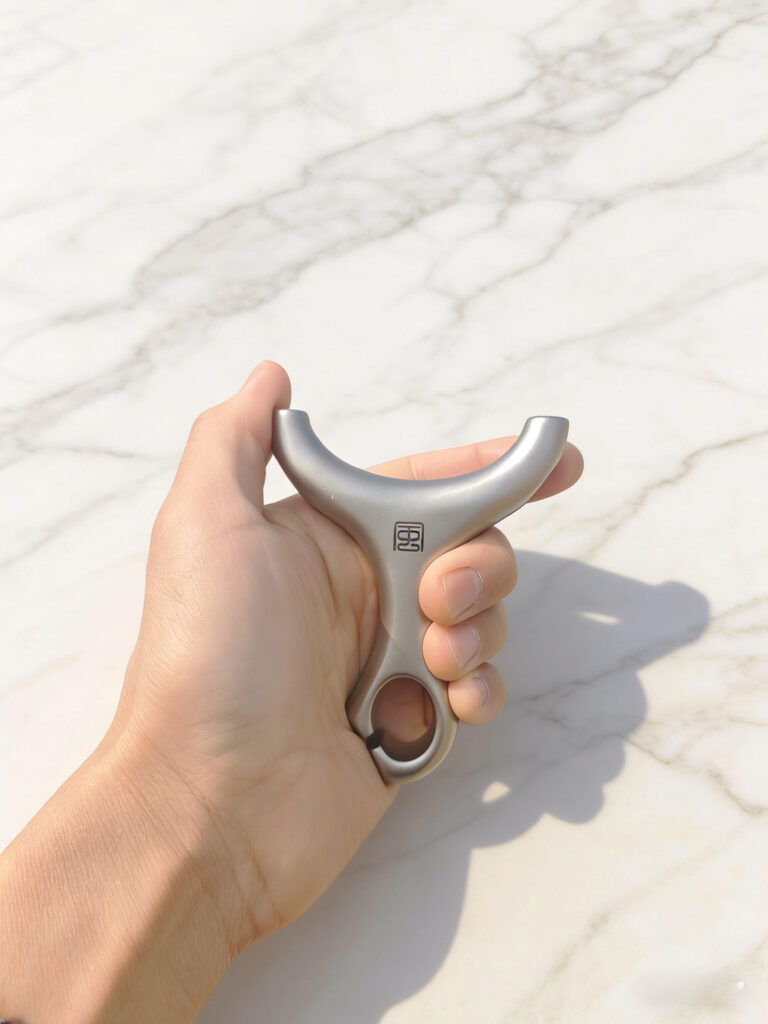
It is defined by how quickly it disappears in your hand.
That feeling is difficult to describe, yet immediately recognizable.
You stop adjusting your grip.
Your alignment becomes instinctive.
Your attention moves entirely to the target.
This is what I call a slingshot that feels “right.”
Balance Before Weight
Many discussions focus only on total weight. But weight alone tells very little about handling.
Two frames with identical mass can feel completely different depending on balance distribution.
If weight sits too far forward, recovery becomes slow.
Too far back, and stability during aiming suffers.
The goal is equilibrium — where the frame settles naturally without effort.
When balance is correct, the shooter unconsciously relaxes. That relaxation improves consistency more than any specification sheet ever could.
Geometry Guides the Shot
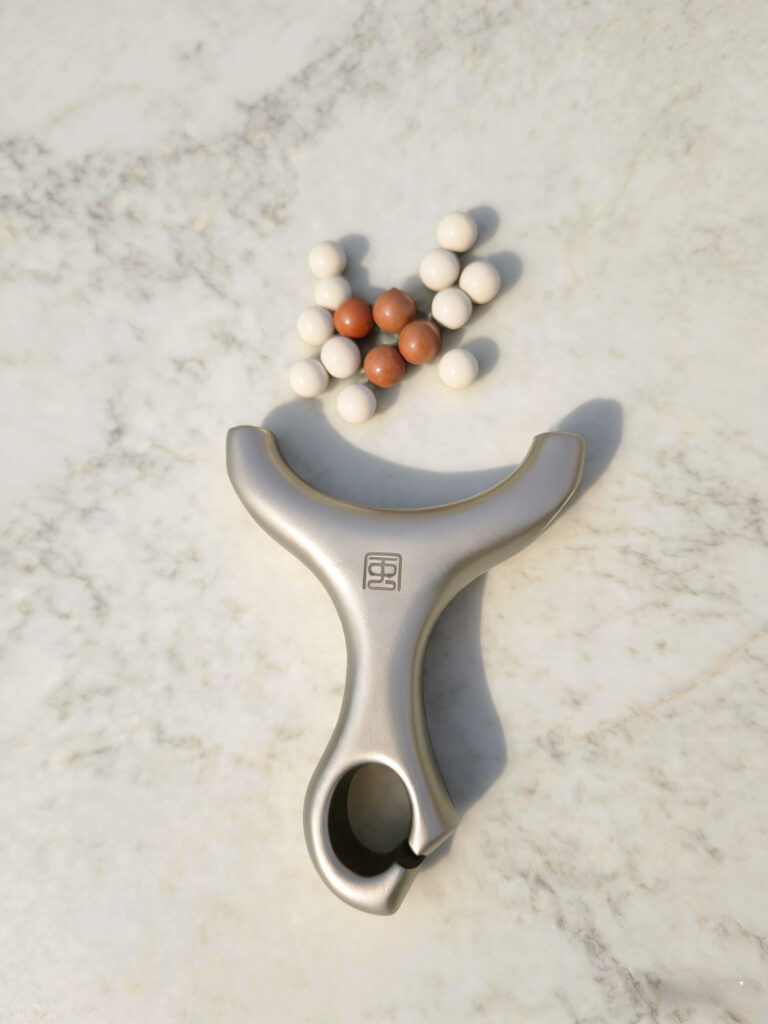
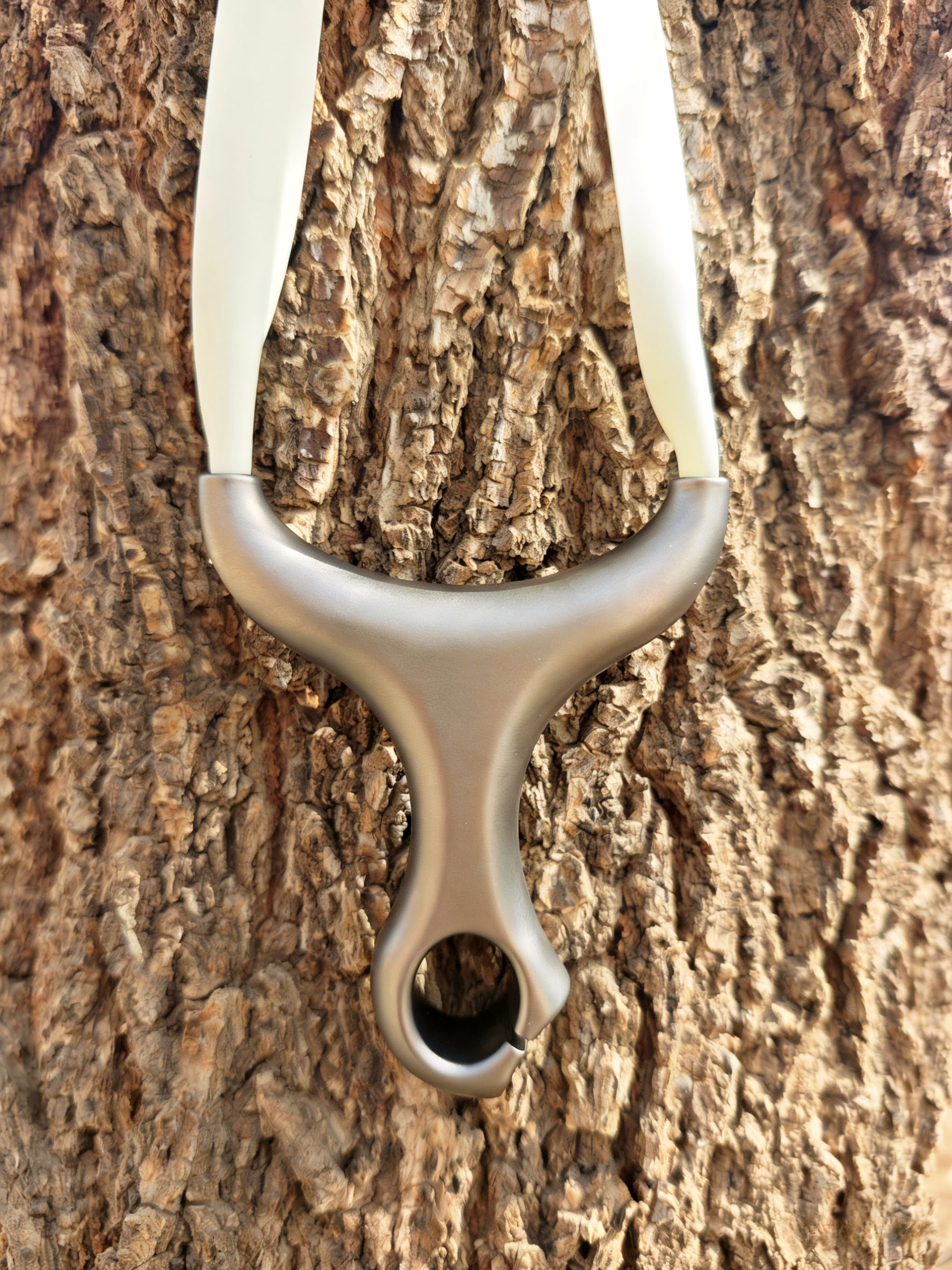
A slingshot does not aim for you, but it can guide alignment.
Clear reference points help the eye repeat positioning without conscious calculation. Subtle angles influence wrist posture and band orientation.
These elements are rarely noticed individually. Instead, they work together quietly, reducing the number of corrections a shooter must make.
Good geometry feels simple.
But simplicity is usually the result of many small refinements.
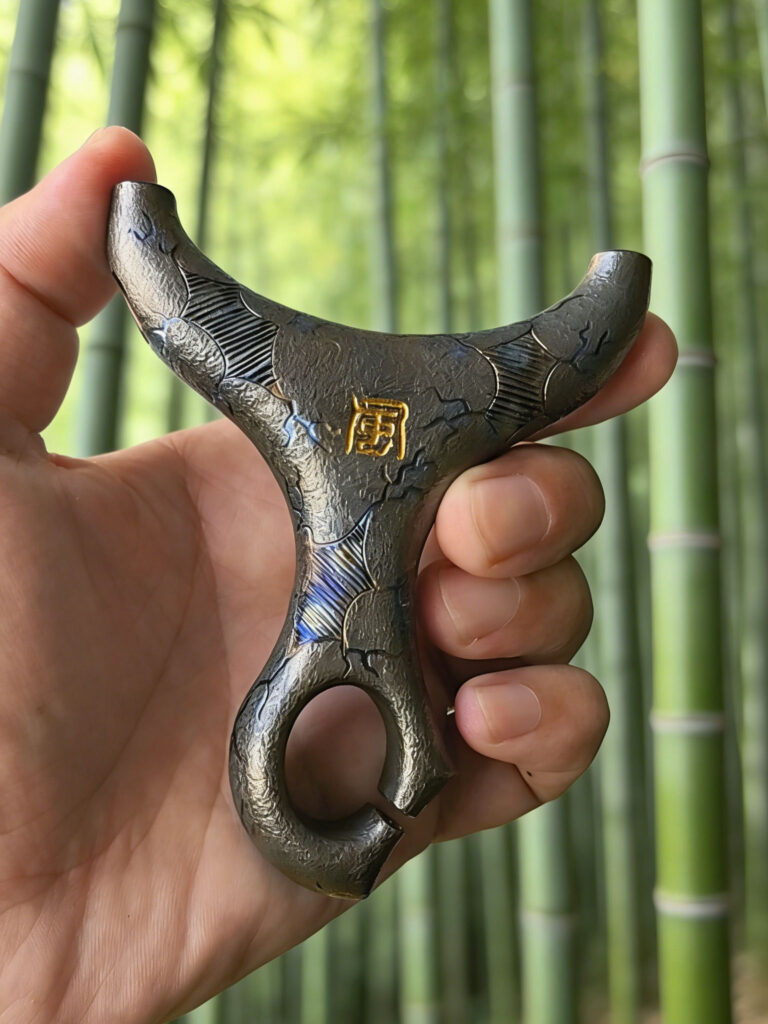
Surface and Contact
The hand reads texture faster than the eye.
Edges that look sharp may feel secure — or uncomfortable after extended shooting. Surfaces that appear smooth may become slippery under real conditions.
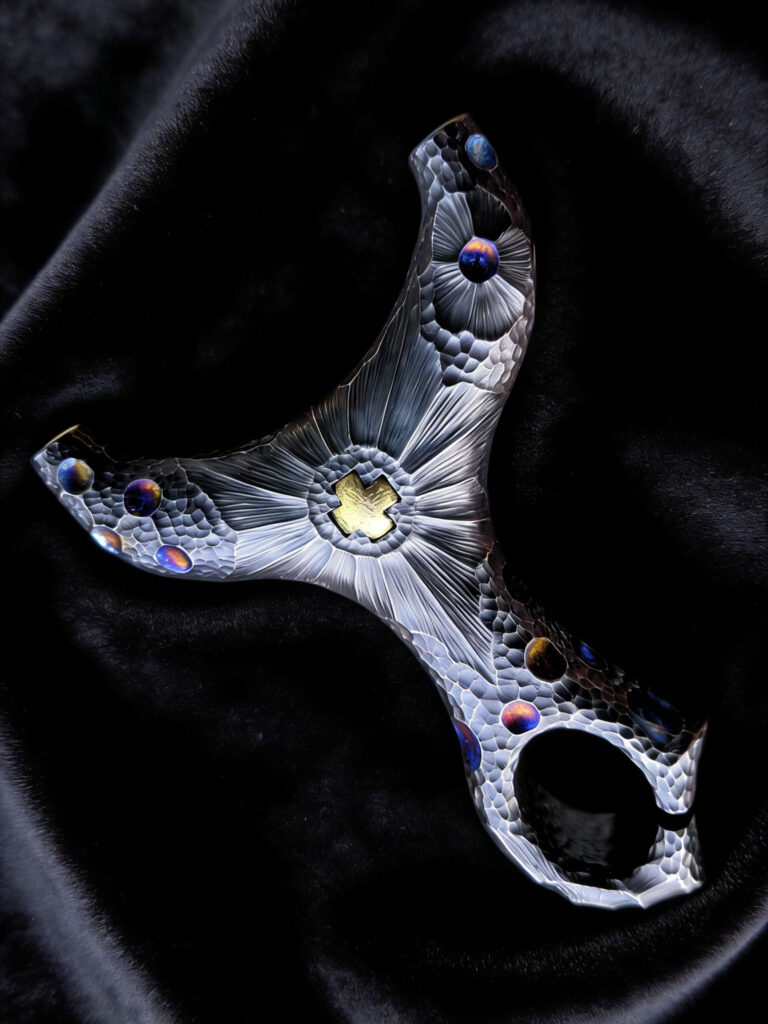
Hand finishing plays an important role here.
The goal is not softness, but controlled feedback — enough texture for confidence, without distraction.
A slingshot should feel stable without needing excessive grip strength.
When the hand can relax, accuracy improves naturally.
Material Changes Character
Material choice does more than change durability or appearance.
It changes rhythm.
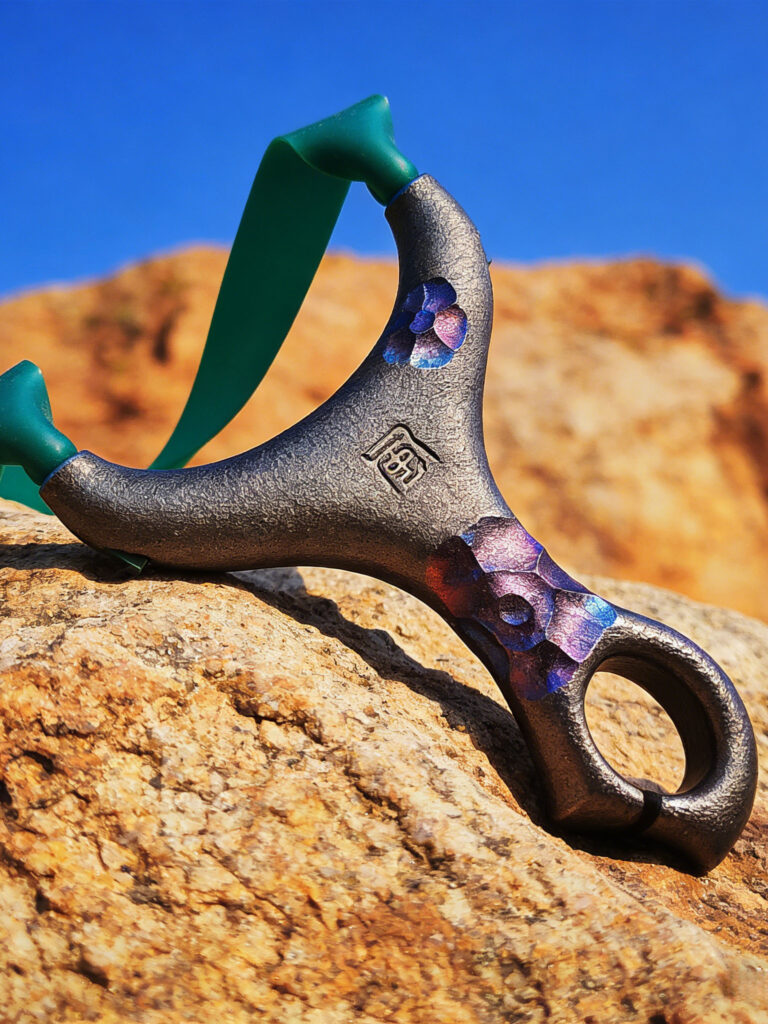
A denser material like 630 Stainless Steel provides grounded feedback and a sense of mechanical stability. Some shooters feel more controlled with that presence.
TC21 Titanium Alloy reduces fatigue and allows faster recovery between shots, supporting longer practice sessions and quicker transitions.
Neither is universally better.
They simply offer different shooting personalities built on the same geometry.
When the Tool Disappears
The best compliment a slingshot can receive is rarely spoken directly.
It happens when a shooter stops thinking about the frame entirely.
Shots flow. Adjustments become minimal. Practice lasts longer because nothing feels distracting.
At that moment, the tool has done its job.
A slingshot that feels “right” is not trying to impress.
It quietly supports the shooter — and then fades into the background, where true focus belongs.